
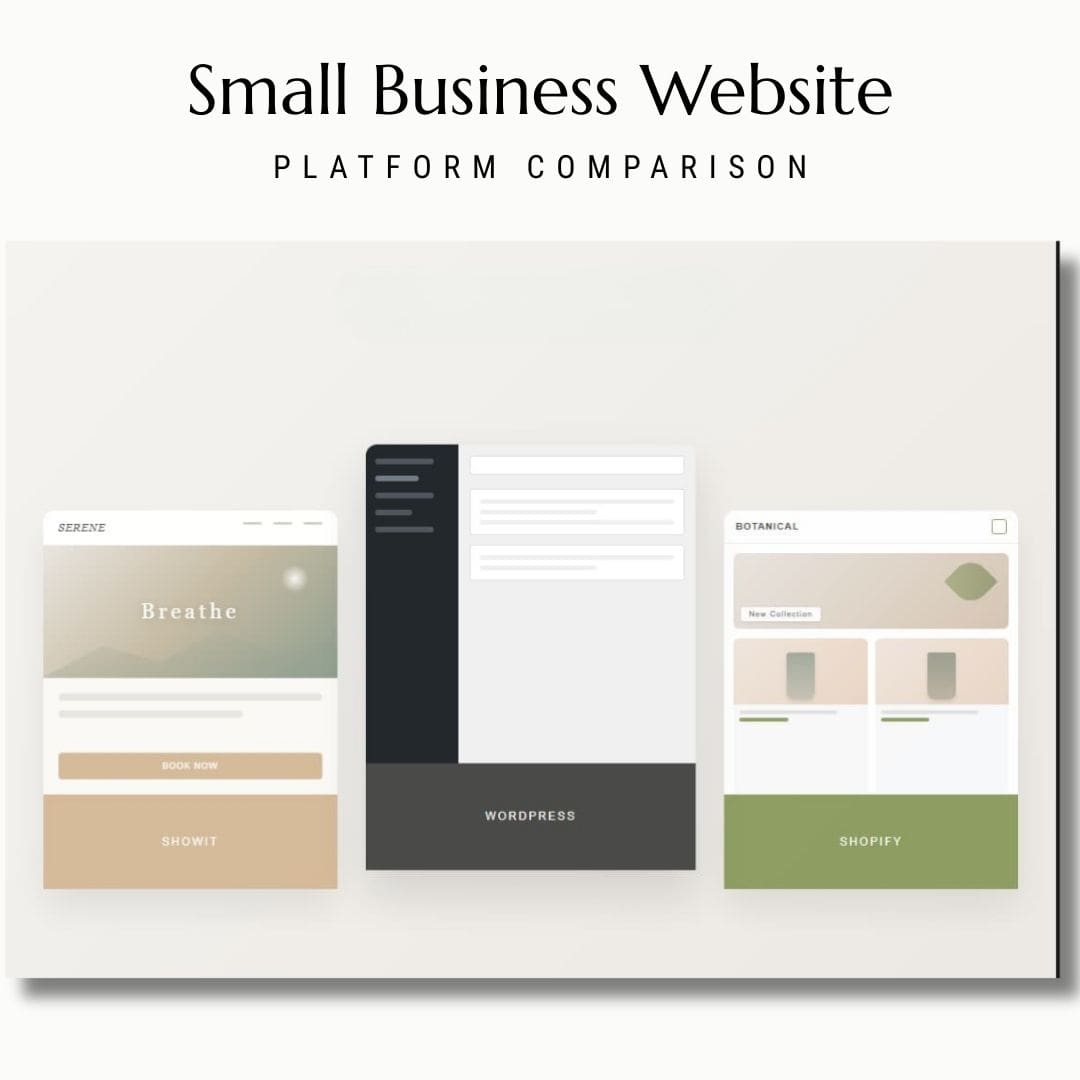

Choosing the right small business website platform is the most important decision you’ll make for your digital presence. Whether you’re launching a yoga studio in Tanjong Pagar or selling clean beauty products online, your small business website needs to balance aesthetic calm with functional clarity.
Yet six months into their business, every Singapore wellness founder faces the same decision paralysis: “I outgrew my landing page. Now what?”
You started with what was easy—maybe a Linktree, maybe a template. But now you need a proper platform that reflects your studio’s energy, handles bookings, and actually ranks when someone searches “yoga studio Singapore.”
The three names keep appearing: Showit, WordPress, and Shopify. Each promises to solve your problems. Each has a fanbase that swears it’s the only option.
But here’s what generic comparison articles miss: You don’t need the “best” platform. You need the platform that matches how your Singapore wellness brand actually operates.
This guide breaks down the three options specifically for wellness entrepreneurs—whether you’re running a home-based Reiki practice, a Pilates studio in Tanjong Pagar, or launching a clean beauty brand.
The Three Platforms: What They Actually Are
Showit: The Design-First Canvas
Showit is a drag-and-drop website builder built for visual creatives who want total design freedom without touching code.
Best for: Service-based wellness brands (yoga studios, nutritionists, therapists, coaches) who prioritize aesthetic brand experience and calm, editorial layouts over complex functionality.
The Singapore Context: Showit has gained traction among Singapore wellness entrepreneurs because it allows that “breathe” aesthetic—think Kinfolk magazine vibes—that aligns with the intentional design philosophy many local brands embrace. It integrates with WordPress for blogging, giving you the design freedom of Showit with the SEO power of WordPress.
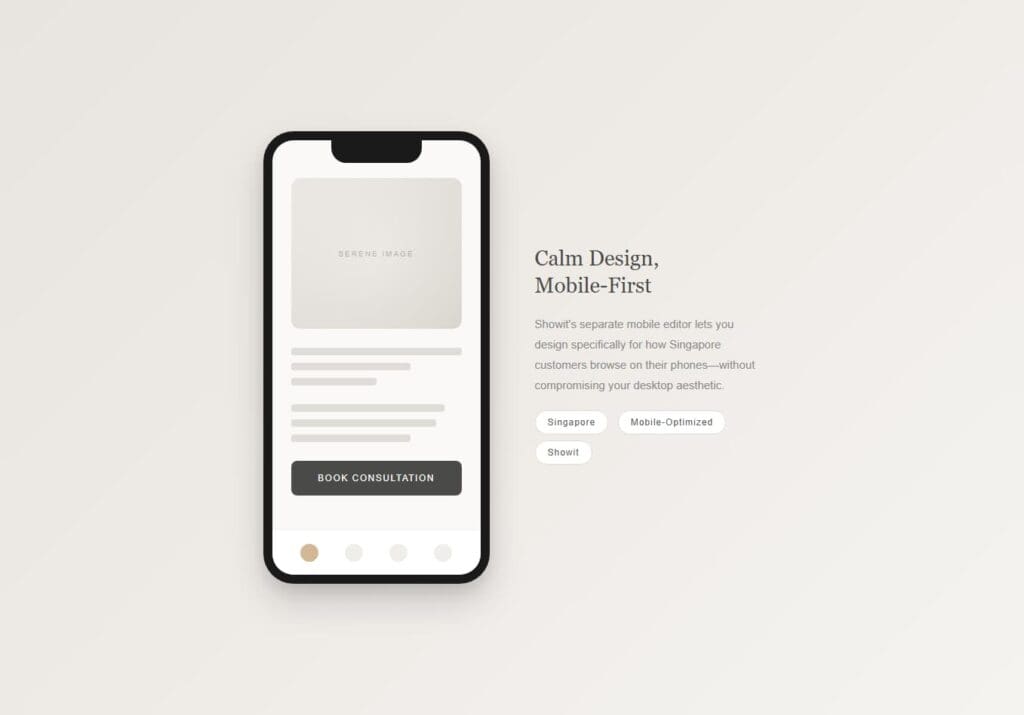
Key Strength: You can design mobile and desktop views separately—crucial for Singapore’s high mobile-traffic market.
WordPress: The Content & SEO Powerhouse
WordPress (the self-hosted .org version) powers 40% of the internet. It’s an open-source content management system that offers unlimited customization.
Best for: Wellness brands with content-heavy strategies—those planning to publish weekly blogs, build resource libraries, or rank aggressively for competitive keywords like “small business SEO Singapore“.
The Singapore Context: If you’re building a wellness media brand or plan to publish extensive guides (like “How to Build a Website that Feels Like Your Brand“), WordPress gives you the infrastructure to compete in Singapore’s saturated wellness market.
Key Strength: Total ownership and scalability. You control hosting, backups, and every SEO detail.
Shopify: The E-Commerce Specialist
Shopify is a hosted e-commerce platform designed specifically for selling products online.
Best for: Wellness product brands—clean beauty lines, herbal supplements, aromatherapy products, or studio merchandise.
The Singapore Context: Shopify handles Singapore-specific payment gateways (PayNow, GrabPay) and logistics better than the other two. If you’re shipping products locally or regionally, the inventory management and tax handling are built for commerce.
Key Strength: Checkout conversion optimization and inventory management that just works.
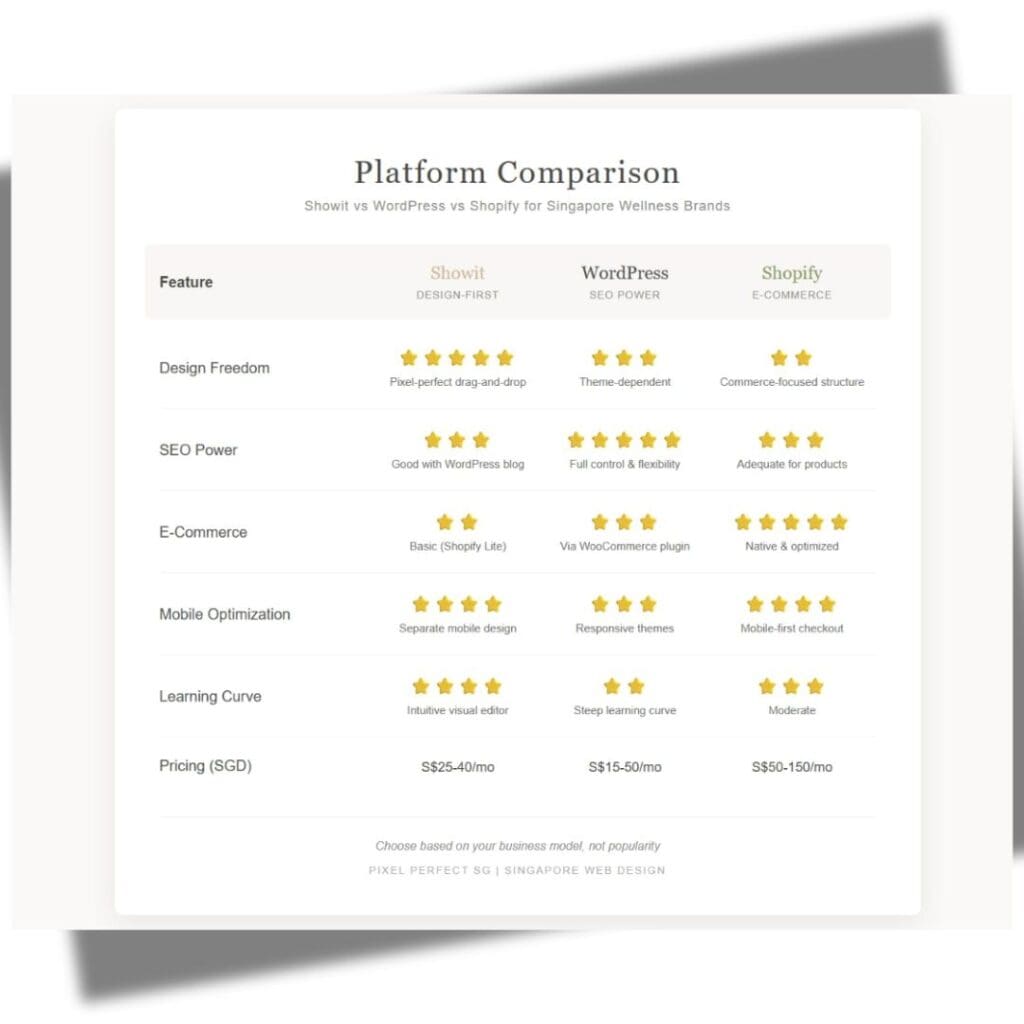
The Comparison: Singapore Wellness Brand Edition
Which Platform Matches Your Business Model?
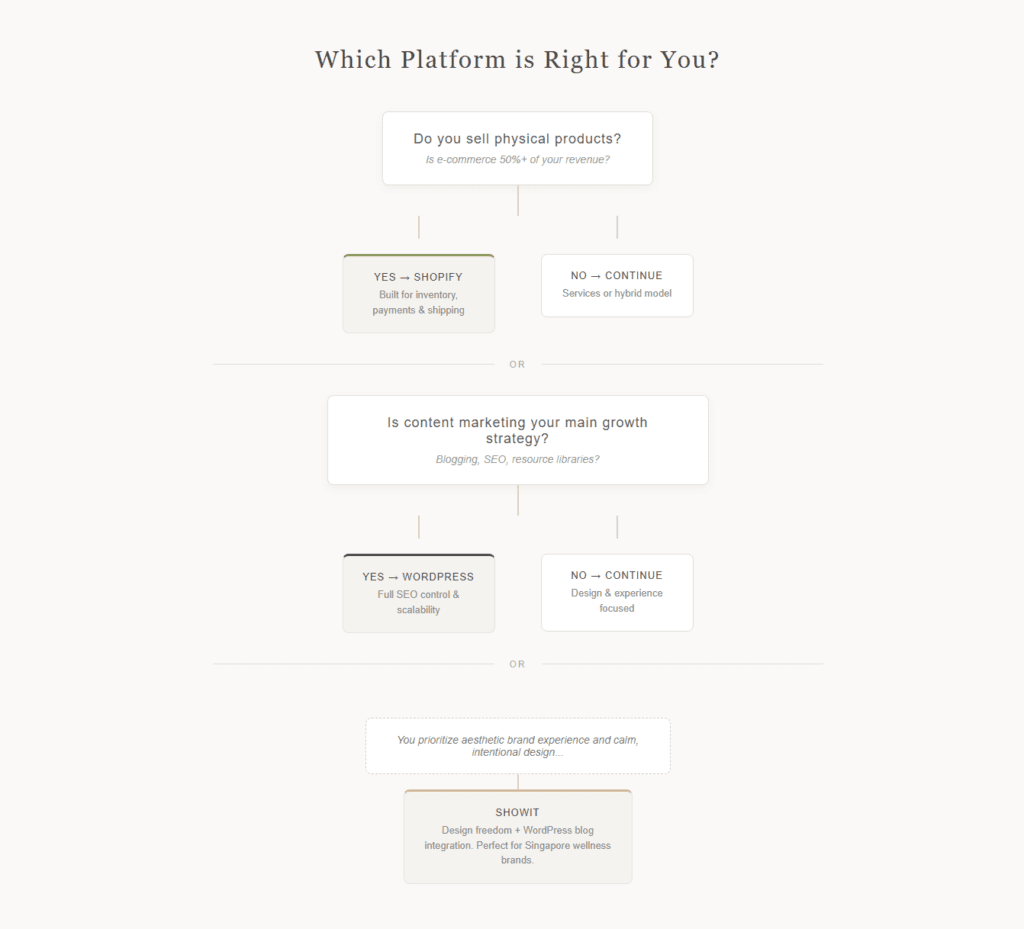
Instead of asking “which is best,” ask “which matches my services?”
Choose Showit if:
- You offer 1-on-1 services (coaching, therapy, consultations)
- Your brand aesthetic is your differentiator (luxury wellness, minimalist beauty)
- You want to build a website that feels like your brand without learning code
- You need a blog but want it beautifully designed (Showit + WordPress blog combo)
- You’re in The Launchpad stage—ready to invest in design but need platform simplicity
Choose WordPress if:
- Content marketing is your primary growth strategy (SEO-focused blogs, resources)
- You need complex functionality (membership portals, course platforms)
- You want to own your data completely and aren’t afraid of technical maintenance
- You’re scaling into The Growth Engine with multiple service tiers
Choose Shopify if:
- You sell physical products (skincare, supplements, wellness tools)
- Inventory management and payment processing are your headaches
- You run a studio + retail shop hybrid
- E-commerce is 50%+ of your revenue
The “Designs That Breathe” Perspective
From a design philosophy standpoint, here’s how each platform aligns with Pixel Perfect’s approach:
Showit allows for the “breathing room” aesthetic—generous whitespace, editorial layouts, and custom mobile experiences that feel calm. This matches the wellness brand need to reduce visitor anxiety.
WordPress requires more constraint. Without careful curation, WordPress sites become cluttered with plugins. They can breathe, but only with intentional design discipline.
Shopify prioritizes conversion over contemplation. The layouts are designed to move product, which can feel aggressive for service-based wellness brands unless heavily customized.
For most Singapore wellness service providers: Showit offers the right balance of aesthetic control and functionality. For product-heavy brands, Shopify is non-negotiable despite design limitations.
The Singapore “Hybrid” Solution
The missing comparison: Many successful local wellness brands use Showit for the main website (aesthetic, service info, blog) + Shopify Lite (embedded buy buttons) for limited product sales.
This gives you the design freedom of Showit with Shopify’s payment reliability—perfect for studios selling just a few SKUs (yoga mats, beauty serums) without managing a full Shopify store.
Next Steps
Still unsure which platform fits your Singapore wellness brand? View The Showit Lab to see live examples of calm, conversion-focused websites, or explore how The Launchpad and Growth Engine tiers match different platform needs.
Ready to stop platform-hopping and start converting? Your website should feel as intentional as the wellness services you provide.
Frequently Asked Questions
Showit is better for design-focused service businesses that want visual freedom without coding. WordPress is better for content-heavy sites needing complex SEO and functionality. For Singapore wellness brands prioritizing aesthetics, Showit often wins; for those building media empires, WordPress is essential.
Showit offers basic e-commerce through Shopify Lite integration (buy buttons), but it’s not designed for full online stores. If products are 50%+ of your revenue, use Shopify instead. Many Singapore wellness brands use Showit for services + Shopify Lite for limited merchandise.
Yes, when paired with WordPress blog integration. Showit handles the design; WordPress handles the SEO-heavy lifting. For local Singapore SEO (“near me” searches), ensure your Google Business Profile is optimized alongside your Showit site.
Platform costs vary: Showit (S$25-40/month), WordPress (S$15-50/month hosting), Shopify (S$50-150/month). Design costs range from S$500 (DIY templates) to S$5,000+ (custom freelance design). The investment should match your business stage—start with The Launchpad tier, scale to Growth Engine.
No. If you’re service-based now but might sell products later, start with Showit and add Shopify Lite when needed. Migrating from Showit to full Shopify is easier than trying to make a service business work on a commerce-first platform.


